STATUS · Handbook · Offener Kataster · work state v3.1 · bundle v3.8 · not in production
FIGURES · all findings synthetic (demo data)
PARTNER · one-person workshop · independent · privately funded
DATE · 2026-09-23 · identifier FORSCH-PROV0445 (PROVISIONAL)
AUTHOR · Thomas Schüller · Syntagma Forschung · Vienna · ORCID 0009-0003-9799-6747
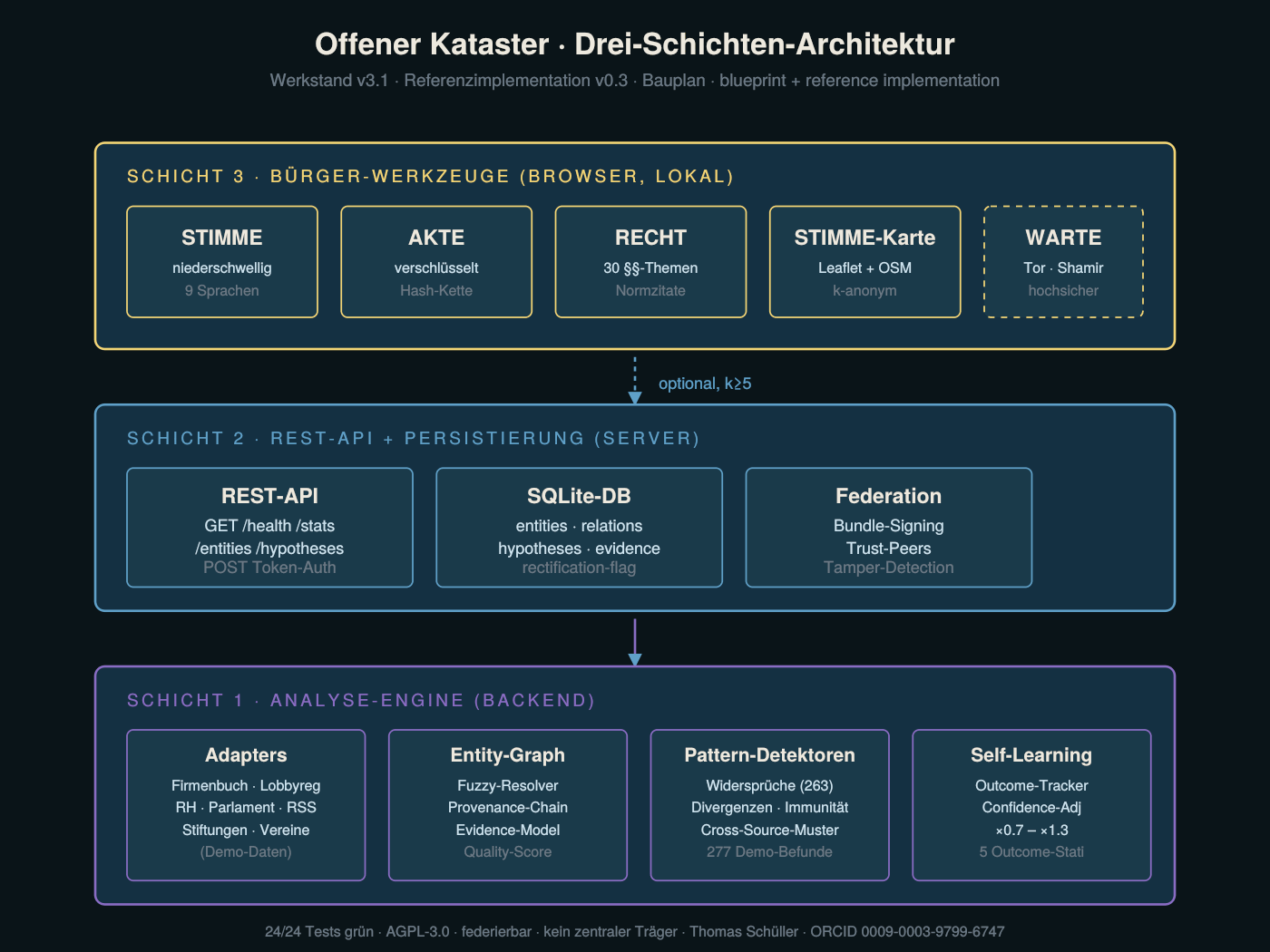
Figure 1: The three layers that the chapters of this handbook follow.
This handbook describes installation, start and operation of all three strands. The work description explains purpose, limits and invariants; this document is about operation.
| Chapter | Strand | Archive |
|---|---|---|
| 1 | Backend (analysis engine, REST API, federation) | strand A |
| 2 | Hosting your own instance | strand A |
| 3 | Citizen tools in the browser | strand B |
| 4 | Manifestos | strand C |
As of: May 2026 · AGPL-3.0 · v0.3
The analysis engine of Offener Kataster. Python, runs server-side. Crawls public sources, builds an entity graph with quality scoring, produces hypothesis findings, persists to SQLite, offers a REST API, federates with other forks.
backend/
├── core/
│   ├── graph.py                    Entity graph with quality scoring
│   ├── entity_resolver.py          Fuzzy match (Levenshtein/Jaccard/substring)
│   └── db_layer.py                 SQLite persistence
├── ingestion/
│   ├── adapters.py                 9 adapters (company register, lobby reg, ...)
│   ├── stimme_bridge.py            STIMME→graph with k-anonymity
│   ├── foundations_adapters.py     Foundations, NGOs, party-affiliated associations
│   └── realtime_adapters.py        Parliament, ministries, Court of Audit
├── graph/
│   └── cross_source_synthesizer.py 5 pattern detectors
├── modules/
│   ├── contradictions.py           contradiction engine (demo: 263 pairs from 73 catalogue rules)
│   ├── regulation_catalog.py       Rule library
│   ├── precedent_divergence.py     OGH/VfGH ↔ CJEU/ECtHR
│   ├── mortality_anomaly.py        Mortality anomalies
│   ├── immunity_tracker.py         Extradition proceedings
│   ├── vulnerable.py               k≥5 for protection-worthy groups
│   ├── institution_atlas.py        41 Austrian institutions
│   ├── sozialsystem.py             AMS / BFA / MA40 tracker
│   └── outcome_tracker.py          Self-learning loop
├── api/
│   └── rest_api.py                 HTTP API with token auth (read open)
├── federation/
│   └── federation.py               Bundle signing, cross-fork sharing
├── crawlers/
│   └── gemeinde_protokoll.py       Municipal-council resolutions
├── tests/
│   └── test_core.py                24 unittest tests
└── run_pipeline.py End-to-end pipelinetar xzf kataster-strang-A-backend.tar.gz
cd backend
python3 run_pipeline.py # produces 277 demo findings
python3 tests/test_core.py # 24 tests greenpython3 -c "
from api.rest_api import KatasterAPI, TokenStore, make_handler
from core.db_layer import KatasterDB
from http.server import HTTPServer
db = KatasterDB('kataster.db')
tokens = TokenStore()
api = KatasterAPI(db, tokens)
HTTPServer(('127.0.0.1', 8080), make_handler(api)).serve_forever()
"Then reachable: - GET /api/v1/health — status -
GET /api/v1/stats — global statistics -
GET /api/v1/entities?type=ORGANIZATION&limit=100 —
lists - GET /api/v1/entities/{id} — single entry with
relations - GET /api/v1/hypotheses — findings -
POST /api/v1/dispute — mark an entry as disputed (token
auth)
from federation.federation import FederationBundle, sign_bundle, verify_and_apply

# Sender:
bundle = FederationBundle(issuer="kataster.example.at",
                           hypotheses=[...])
signed = sign_bundle(bundle, private_key=...)

# Recipient:
report = verify_and_apply(signed, db_b,
                           trusted_peers=["kataster.example.at"],
                           public_keys={...})
print(report) # {'valid_signature': True, 'hypotheses_imported': N, ...}All modules have __main__ demos:
python3 ingestion/stimme_bridge.py        # k-anonymity
python3 core/entity_resolver.py           # fuzzy match
python3 core/db_layer.py                  # SQLite demo
python3 modules/sozialsystem.py           # AMS/BFA/MA40
python3 modules/outcome_tracker.py        # self-learning
python3 modules/institution_atlas.py      # institutions
python3 federation/federation.py # federation with demois_marked_disputed)Anyone forking this: - Add adapters for other countries (the data model is generic) - Add your own pattern detectors - Swap the DB backend (e.g. PostgreSQL instead of SQLite) - If you change the invariants: choose a different name
AGPL-3.0. No warranty. Whoever deploys bears responsibility for GDPR, personality rights, correct handling of sources.
Self-hosting guide for a Kataster instance.
# 1. Clone the repo
git clone <your-fork-url> kataster
cd kataster/hosting

# 2. Place frontend files in ./frontend
mkdir -p frontend
cp ../buerger-bundle/*.html frontend/
cp ../buerger-bundle/stimme-i18n.js frontend/

# 3. Backend-Code in ./backend ablegen
ln -s ../backend ./backend

# 4. Federation-Identity erzeugen (einmalig!)
docker compose run --rm api python3 -c "
from backend.federation.federation import InstanceIdentity
from pathlib import Path
i = InstanceIdentity.generate('kataster.MEINE-DOMAIN.example')
Path('/federation').mkdir(exist_ok=True)
i.to_secret_file(Path('/federation/identity.json'))
print('Public Key:', i.public_key.hex())
print('Fingerprint:', i.fingerprint)
"

# 5. Stack starten
docker compose up -d

# 6. Initial-Crawl ausführen
docker compose --profile cron run --rm crawler

# 7. Tor-Onion-Adresse abfragen (nach ~30s warten)
docker compose exec tor cat /var/lib/tor/warte/hostname┌──────────────────────────────────────┐
│ Internet │
└────────┬──────────┬─────────────────┘
│ │
│HTTP/S │Tor (.onion)
↓ ↓
┌────────┐ ┌────────┐
│ nginx │ │ tor │
│ proxy │ │daemon │
└────┬───┘ └────┬───┘
│ │
├───────────┤
↓ ↓
┌────────┐ ┌────────┐
│frontend│ │ api │
│(static)│ │(python)│
└────────┘ └───┬────┘
│
↓
┌─────────┐
│ SQLite │
│ +cache │
└─────────┘Trust other instances — per peer:
docker compose run --rm api python3 -c "
from backend.federation.federation import FederationSubscriber, TrustedPeer
from pathlib import Path
sub = FederationSubscriber(Path('/federation/peers.json'))
sub.trust_peer(TrustedPeer(
    instance_id='kataster.OTHER-INSTANCE.example',
    public_key='HEX_PUBLIC_KEY',
    fingerprint='SHORT_FINGERPRINT',
    trust_level=2,
))
"
Other instances pull your bundle every few hours via cron:
# Crontab auf Peer-Instanz:
0 */4 * * * curl https://kataster.MEINE-DOMAIN.example/federation/bundle.json | \
docker compose run --rm api python3 -m backend.federation.import_bundlehttps://DEINE-DOMAIN/api/v1/health — Server-Statushttps://DEINE-DOMAIN/api/v1/stats — globale
Statistikhttps://DEINE-DOMAIN/api/v1/entities — Liste der
Entitieshttps://DEINE-DOMAIN/api/v1/hypotheses — Liste der
Befundehttps://DEINE-DOMAIN/federation/bundle.json —
föderiertes Bundlehttps://DEINE-DOMAIN/ — Bürger-Stack-Übersichthttps://DEINE-DOMAIN/dashboard.html — Public
DashboardData persistence across 4 volumes: - api-data: SQLite-DB
+ Cache + Manifests → täglich sichern - tokens: API-Tokens
→ einmalig sichern, dann kaum Änderungen - federation-data:
Identity + Peers → einmalig sichern (Identity ist KRITISCH) -
tor-data: .onion-Adresse → einmalig sichern (sonst neue
Adresse)
Recommendation: daily restic or borg backup
on separate storage.
docker compose logs apidocker compose logs tor/data/cache/manifests/As of: May 2026 · AGPL-3.0
Browser tools that people use directly — no account, no tracking, no central server. Three levels depending on protection needs.
Level 1 · low-threshold (for the majority, for
people who otherwise go unheard): - stimme.html — Something
is wrong. Say it. - stimme-karte.html — Observations with a
location reference - recht.html — AI legal help with
statute citations - akte.html — Case-file keeping with hash
chain + encryption
Level 2 · structured (for formal legal casework): -
evidentia.html — 78 case categories, sensitivity tiers
Level 3 · high-security (for insiders at risk): -
warte-client.html — Tor-based, Shamir 3-of-5 secret
sharing
Overview / dispatcher: -
buerger-stack.html — Decision aid: which tool -
dashboard.html — Public dashboard for browsing findings
These are voice tools for self-advocacy by those directly affected — not informant tools for third-party surveillance of others.
All tools are static HTML files — just open in the browser. No server, no build step.
tar xzf kataster-strang-B-buergertools.tar.gz
cd buergertools
# open in the browser:
firefox buerger-stack.html
Or: put all files on a web server (nginx, Apache, even GitHub Pages works). Paths are relative — they link to each other.
stimme-i18n.js contains strings in 9 languages: - de ·
en · tr · bks · ar · fa · ro · uk · leichte (Easy Language)
Included in stimme.html; the language buttons call
applyTranslations(lang). So far only some elements carry
data-i18n markers. For full multilingualism: 1.
stimme-i18n.js is included (done) 2. Wire language buttons
to applyTranslations(lang) 3. Mark all texts with
data-i18n="key"
AKTE stores in IndexedDB unencrypted by default (browser protection suffices for non-sensitive matters).
The lock button sets a password: - PBKDF2 200,000 iterations →
256-bit key - AES-GCM for case-file encryption - The password is
never stored. Forget it → files gone. - A test blob in
the vault store detects a wrong password.
Everything stays local. Except when you explicitly choose to “pass on” or “have counted”: - STIMME → optionally to the STIMME bridge (strand A) → k-anonymous aggregation - AKTE → export JSON, pass on manually (no auto-upload) - RECHT → no data leaves the browser - Evidentia → manual handover to NGOs / lawyers - WARTE → Tor + Shamir → recipient ceremony
Paths in the HTML files are relative
(href="stimme.html"). Anyone integrating individual tools
into their own setup can adjust or remove these paths.
The design system of the tools is inline CSS, no external stylesheets. The Atkinson Hyperlegible font comes from Google Fonts. For offline operation, host the font locally.
AGPL-3.0. Not legal advice in the juristic sense. In an acute emergency (Austria): - Police 133 · Ambulance 144 · Crisis line 142 - Women’s helpline 0800 222 555 · Rat auf Draht 147
The four manifestos are in strand C, each as DE and EN version (HTML,
readable directly in the browser): civic-stack,
kataster-architecture, kataster-manifest,
warte-manifest. STATUS header and author line are identical
in both languages; project names (Offener Kataster, WARTE, Evidentia,
Offenes Werkzeug) stay untranslated.
Licence: code AGPL-3.0-or-later · text CC BY 4.0. Not legal advice.